Non Surgical Knee Pain Treatment That Works
Discover non surgical knee pain treatment options that reduce pain, restore mobility, and help you avoid surgery with a personalized plan.
Knee pain changes more than movement. It changes how you train, how you travel, how long you stand in the kitchen, and whether you trust your body to carry you through the next decade. That is why non surgical knee pain treatment has become such a priority for people who want more than temporary relief. They want to protect the joint, restore function, and stay in command of their future.
For many patients, the standard path feels too narrow. Pain medication may dull symptoms. Cortisone can quiet inflammation for a period of time. Physical therapy can help, sometimes significantly, but not always enough on its own. Then the conversation turns to surgery as if that is the natural next step. In reality, there is a wide middle ground between masking pain and replacing a joint, and that middle ground is where real transformation often begins.
What non surgical knee pain treatment should actually do
A strong treatment plan should not be built around a single shot, a single device, or a generic protocol. The knee is a complex joint influenced by cartilage health, tendon integrity, ligament stability, muscle balance, gait mechanics, inflammation, metabolic health, and age-related decline in healing capacity. If the plan ignores those variables, results tend to be partial and short-lived.
The right non surgical knee pain treatment should do three things at once. It should calm pain, improve the joint environment, and support the body’s ability to repair and stabilize the area over time. That is a very different standard from simply making the knee hurt less for a few weeks.
This is where regenerative and precision-based care stands apart. Instead of treating the knee like a worn part that must eventually be cut out, it treats the body as a living system with the capacity to recover when given the right signals and support.
Why knees hurt in the first place
Not all knee pain is the same, even when the symptoms sound similar. One person has bone-on-bone arthritis with swelling after activity. Another has a degenerative meniscus tear that flares when twisting. Someone else has patellar tracking problems, chronic tendon irritation, old sports injuries, or instability that has been compensated for so long it now affects the hips and low back.
That matters because treatment depends on the true driver of pain. A knee with mechanical instability needs a different strategy than a knee where inflammation is the dominant issue. A patient with mild cartilage wear but poor metabolic health may heal differently from someone with the same MRI findings and far better cellular resilience.
This is also why imaging alone can be misleading. Many people have dramatic MRI findings and manageable symptoms. Others have severe pain with only moderate structural change. The goal is not to chase a scan. The goal is to understand how structure, inflammation, function, and biology interact in your specific case.
The most effective options for non surgical knee pain treatment
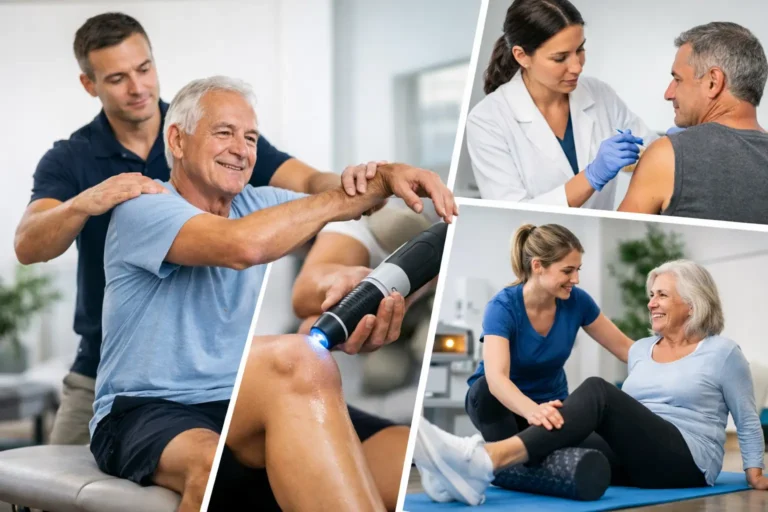
The most effective care is usually layered. Physical rehabilitation remains foundational because the knee depends on strong surrounding muscles, joint control, and movement quality. If glutes are weak, if the quad is underperforming, or if walking mechanics are off, the knee absorbs more stress than it should. Smart rehab restores support that no injection can create on its own.
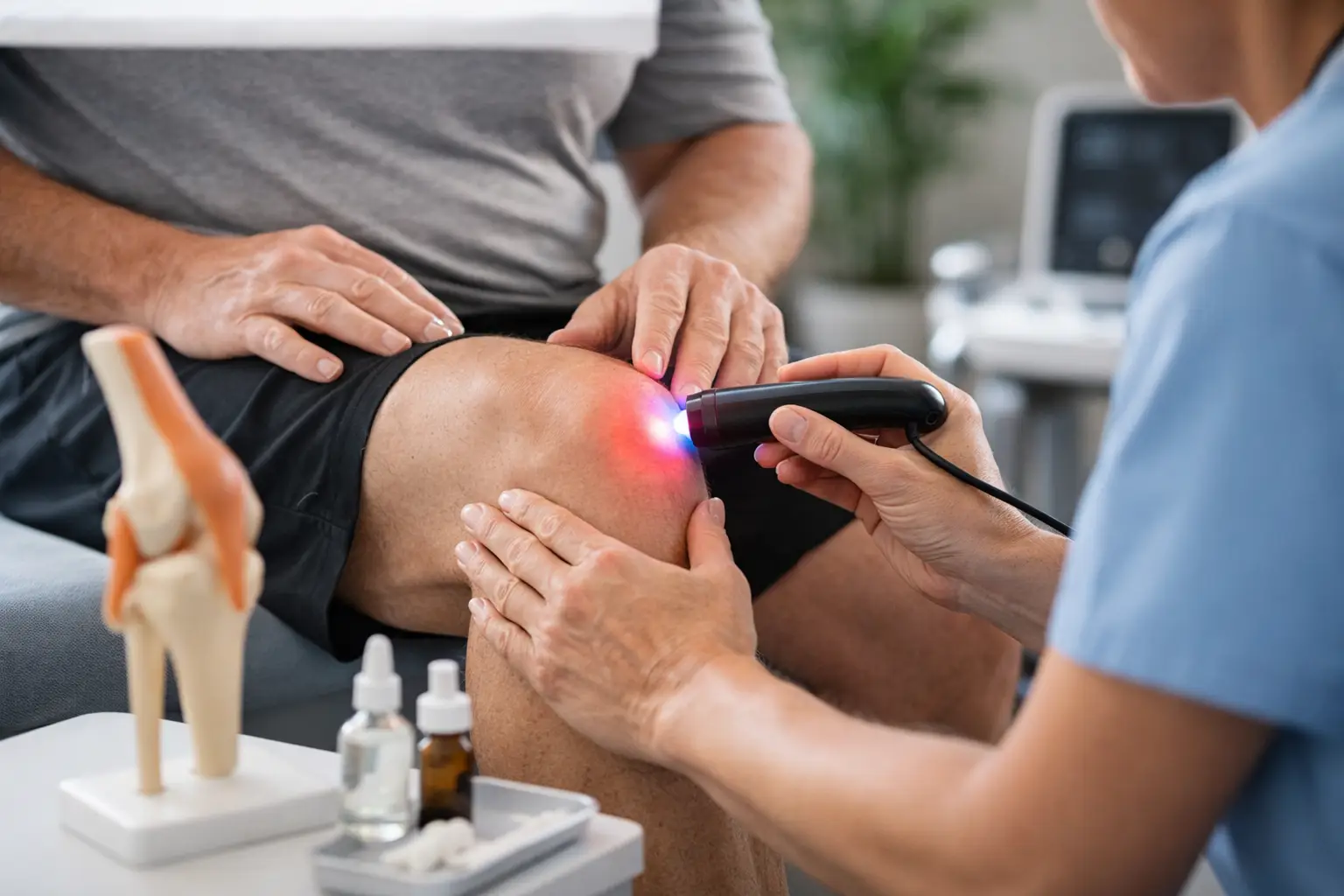
Biologic and regenerative therapies can add another dimension by helping shift the joint environment. Depending on the patient, these approaches may be used to address inflammation, support tissue signaling, and encourage a more constructive healing response. This is especially relevant for people who are trying to preserve joint function rather than simply suppress symptoms.
Certain injectable approaches may help reduce pain and improve movement, but results vary. Some people respond well when treatment is delivered at the right stage of degeneration. Others need a broader strategy because the knee problem is tied to systemic inflammation, excess body weight, insulin resistance, or chronic overuse. That is the trade-off many patients miss. A local treatment can help a local problem, but not every knee problem is purely local.
Bracing, footwear changes, and activity modification can also be useful, particularly when unloading a specific compartment of the knee or reducing aggravating mechanics. These interventions are rarely glamorous, but they can create enough stability and symptom relief to help other therapies work better.
For some patients, weight reduction becomes one of the most powerful forms of joint preservation. Even modest changes can lower load across the knee with every step. That is not a cosmetic issue. It is a force issue, a mobility issue, and often a longevity issue.
When conservative care is not enough
There is a difference between conservative care and comprehensive care. Conservative care often means basic measures done in isolation and continued too long even when they stop producing results. Comprehensive care means reassessing the joint, the biology, and the treatment sequence before jumping to surgery.
If you have already tried rest, medications, therapy, or routine injections and still feel limited, that does not automatically mean surgery is the only answer. It may mean your care has not been precise enough. It may mean the treatment focused on pain but not joint preservation. It may mean no one has looked at the full healing picture.
That said, not every knee can or should be managed without surgery forever. Severe structural damage, advanced deformity, major instability, or loss of function that does not respond to appropriate care may still require an orthopedic procedure. The key is to make that decision from a position of clarity, not momentum. Surgery should be chosen because it is truly the best option, not because the earlier options were incomplete.
Who benefits most from a personalized approach
Patients who do best with advanced non surgical knee pain treatment are often the ones who are not willing to settle for the usual cycle of flare, injection, temporary relief, and decline. They want to hike again, train again, travel comfortably, or simply move through daily life without guarding every step.
This approach is especially appealing for adults who are active, surgery-averse, managing early to moderate joint degeneration, or trying to delay joint replacement while maintaining quality of life. It also resonates with people who understand that healing is influenced by more than a single body part. Inflammation, recovery capacity, sleep, hormones, circulation, and nutrient status all shape outcomes.
That broader lens is part of what makes regenerative medicine so compelling. At New Life Regen Center, the philosophy is not built around managing breakdown. It is built around restoring biological potential. For the right patient, that shift changes everything.
How to judge whether a treatment plan is actually credible
A credible plan should begin with careful evaluation, not sales language. You should understand what structure is involved, what stage the condition is in, what the realistic goals are, and how progress will be measured. If a provider promises that one therapy works for every knee, skepticism is healthy.
Ask whether the plan addresses both symptoms and function. Ask what happens if the first intervention only partially helps. Ask how rehab, biologic support, inflammation control, and long-term prevention fit together. Premium care is not about receiving more procedures. It is about receiving more precision.
You should also expect honesty about timelines. Knees that have been declining for years rarely rebound in a week. Some therapies aim for quick symptom reduction, while others work more gradually as tissue environment and movement capacity improve. Sustainable recovery often requires patience, but patience makes sense when there is a clear strategy behind it.
The bigger goal is freedom, not just pain relief
Most people do not seek care because they want a different MRI. They seek care because they want their life back. They want to get off the sidelines, trust their body again, and move with confidence instead of caution.
That is the real promise of modern non surgical knee pain treatment when it is done well. It offers a path that respects the intelligence of the body, uses advanced tools with intention, and aims for more than symptom management. It aims for preservation, resilience, and a future where your knees support the life you still plan to build.
If your knee pain has been quietly shrinking your world, the next step is not to surrender to that trajectory. It is to choose a strategy worthy of the life you want to keep living.