How to Avoid Joint Replacement Naturally
Learn how to avoid joint replacement with regenerative care, strength, weight loss, and early action that protects mobility and long-term function.
The moment a surgeon says, “You may be heading toward joint replacement,” many people feel their future narrow. They picture downtime, loss of independence, and a body that no longer responds the way it used to. But for many patients, that recommendation is not the only path. If you want to know how to avoid joint replacement, the real answer is not one miracle fix. It is a strategy – built around preserving tissue, reducing mechanical stress, restoring function, and acting before degeneration becomes irreversible.
Why joint replacement is not always the first answer
Joint replacement can be life-changing when a joint is severely damaged and every conservative option has failed. That matters. There are cases where surgery is appropriate and delaying it only prolongs suffering.
But there is another reality most patients are not told early enough. Many joints do not fail overnight. They decline over years through inflammation, instability, muscle loss, poor biomechanics, metabolic stress, overuse, and under-recovery. By the time pain becomes constant, the deeper problem has often been building for a long time.
That is why a preservation mindset matters. Instead of waiting until cartilage loss, bone changes, and loss of movement force a surgical decision, the goal is to change the trajectory sooner. The body has more capacity for repair and adaptation than reactive medicine often gives it credit for.
How to avoid joint replacement by changing the joint environment
A painful knee, hip, or shoulder is rarely just a “bad joint.” It exists inside a biological environment. If that environment is inflamed, weak, unstable, insulin resistant, under-muscled, and mechanically overloaded, the joint keeps breaking down. If that environment improves, pain often drops and function often rises – sometimes dramatically.
This is the part many people miss. Joint preservation is not only about the cartilage surface. It is about the tissues that support the joint, the signals that regulate healing, and the daily forces the joint has to absorb.
That is why the most effective non-surgical approach is layered. It respects structure, biology, and lifestyle at the same time.
Start earlier than feels necessary
One of the biggest mistakes patients make is waiting until the pain becomes unbearable. Early stiffness, swelling after activity, reduced range of motion, clicking with discomfort, and avoidance of certain movements are not minor nuisances. They are warnings.
When intervention begins earlier, there is often more cartilage left to protect, less compensation throughout the kinetic chain, and more room for regenerative strategies to work. Waiting until the joint is bone-on-bone narrows your options.
Reduce excess load without becoming less active
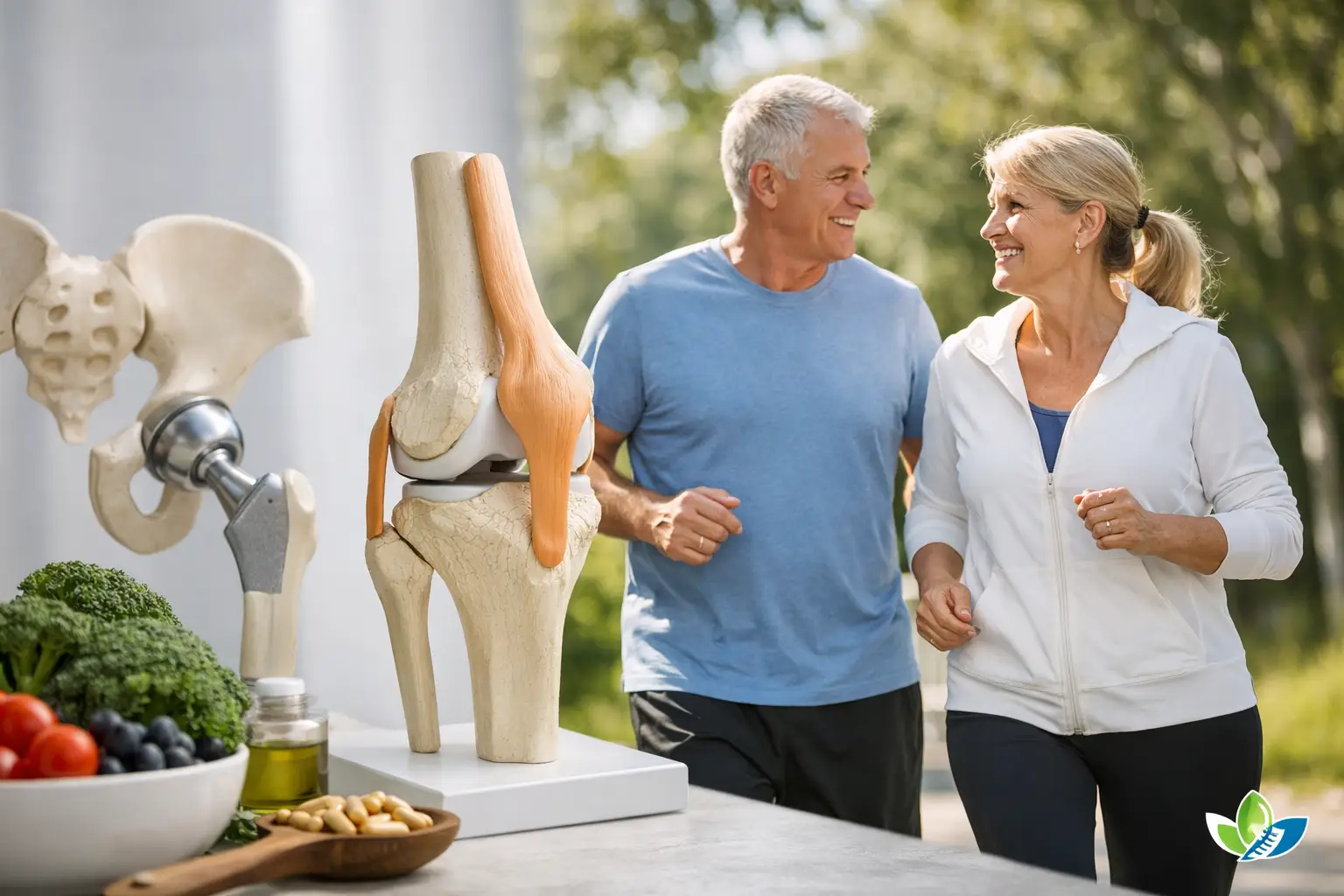
If a knee or hip is carrying too much force with every step, the tissue burden adds up quickly. Weight loss can be one of the most powerful ways to reduce stress on lower body joints, especially when inflammation is also present.
But there is a nuance here. The goal is not simply to weigh less. The goal is to improve body composition, reduce inflammatory load, and preserve muscle. Rapid dieting without strength work can make a joint feel worse because the support system around it gets weaker.
For many adults, a better path is metabolic correction paired with sustainable movement. Less pain often begins when the body stops operating in a chronic inflammatory state.
Build the muscles that protect the joint
Weak muscles leave joints exposed. The knee depends heavily on the quadriceps, hamstrings, glutes, calves, and core. The hip needs deep stabilizers and strong glutes. The shoulder depends on the rotator cuff, scapular stabilizers, and thoracic mobility.
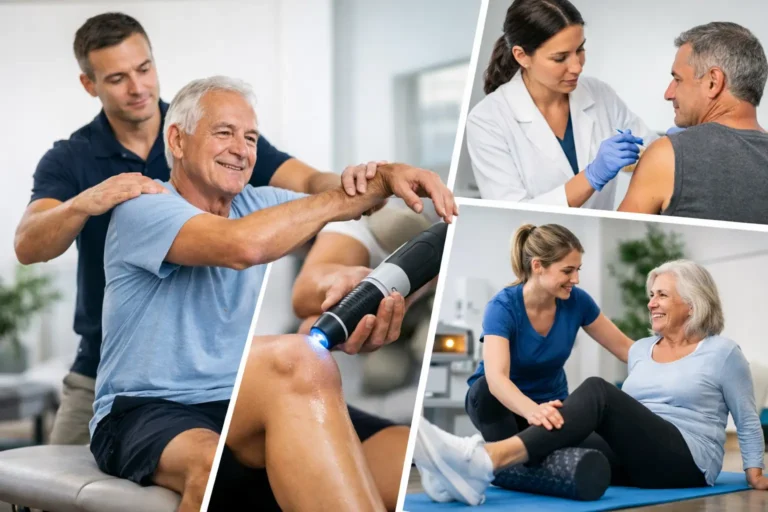
This is where smart rehabilitation changes the game. Not generic exercise. Targeted loading. Proper sequencing. Better mechanics. Many patients have been told to “just strengthen it,” but strengthening the wrong pattern can reinforce the same dysfunction that created the pain.
A high-value program usually focuses on control first, then strength, then endurance, then return to more demanding activity. Done well, this can reduce pain and improve joint tracking, shock absorption, and confidence in movement.
Treat inflammation as a driver, not just a symptom
Pain medication may mute the signal, but it does not change the conditions that keep irritating the joint. Chronic inflammation accelerates tissue breakdown, sensitizes nerves, and makes normal movement feel threatening.
That does not mean all inflammation is bad. Some is part of healing. The problem is persistent, dysregulated inflammation that never resolves.
For patients trying to avoid surgery, this is a turning point. Nutrition, sleep quality, blood sugar stability, stress burden, recovery capacity, and systemic health all influence what happens inside a joint. If these are ignored, even the best local treatment may have limited impact.
A precision approach looks beyond the scan. It asks why the body is staying inflamed, why healing has stalled, and what internal signals need to change.
Regenerative medicine and the effort to preserve joints
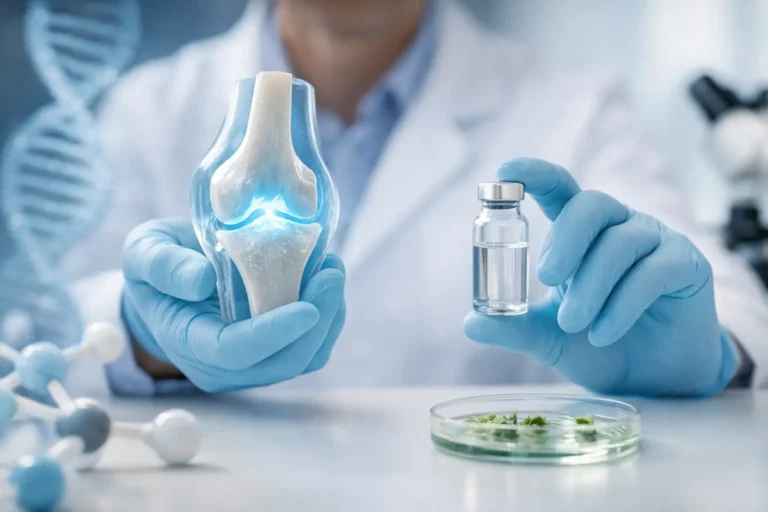
For the right patient, regenerative medicine can play an important role in how to avoid joint replacement. This is especially true when the goal is not merely temporary pain relief, but support for tissue repair, cellular signaling, and a stronger healing environment.
Not every patient is a candidate, and not every joint responds the same way. Severity matters. Alignment matters. Age, activity level, metabolic health, and structural damage matter. Anyone promising that regenerative therapy replaces surgery in every case is oversimplifying a complex reality.
Still, there is a reason more patients are seeking biologic and precision-based care. Advanced non-surgical therapies may help calm inflammation, support damaged tissues, improve function, and extend the life of a joint that might otherwise be placed on a fast track to replacement.
This is where a more future-facing model of medicine stands apart. Instead of managing decline until hardware becomes the next step, the focus shifts to biomolecular restoration – helping the body re-engage healing pathways that conventional care often leaves untouched.
Image the joint, but assess the whole person
MRI findings matter, but they are not the whole story. Some people with significant degeneration still function well, while others with more modest imaging findings are deeply limited. The difference often comes down to the broader system.
A premium level of care asks better questions. Is the pain actually coming from the joint, or from instability, tendon overload, spinal referral, or poor mechanics? Are there inflammatory drivers slowing recovery? Is there a hormonal, vascular, or metabolic component making tissue resilience worse?
That wider lens matters because a preserved joint is not just an orthopedic outcome. It is a whole-body outcome.
Daily habits that determine whether a joint holds or declines
Patients often look for one intervention powerful enough to avoid surgery. More often, results come from a set of disciplined choices repeated over time.
Movement quality matters more than movement quantity. Ten thousand painful steps with poor mechanics are not a healing strategy. On the other hand, complete rest usually weakens tissue tolerance. The middle path is guided, progressive, intelligent loading.
Sleep matters because many repair processes are recovery-dependent. Protein intake matters because tissue maintenance requires raw material. Blood sugar control matters because chronically elevated glucose can impair collagen integrity and worsen inflammation. Footwear, work setup, training volume, and even how you get in and out of a car can matter when a joint is already vulnerable.
None of this sounds glamorous. That is exactly why it works. Biology responds to consistency.
When surgery may still be the right call
A strong article on how to avoid joint replacement should also be honest about limits. Some joints are too far gone. Severe collapse, advanced deformity, profound loss of function, and persistent pain that has not responded to appropriate non-surgical care can make replacement the better option.
Avoiding surgery at all costs is not the goal. Preserving your mobility, autonomy, and long-term quality of life is the goal. Sometimes that means regenerative intervention and structured rehabilitation. Sometimes it means surgery after thoughtful evaluation. Wisdom is knowing the difference.
What patients deserve is not a reflexive rush to the operating room or a fantasy that every joint can be saved. They deserve an individualized roadmap.
The better question is how long you can preserve the joint
For many adults, the path forward is not about perfection. It is about buying years of better movement, lower pain, and stronger function while protecting future options. If a joint can be stabilized, strengthened, and biologically supported now, that may delay surgery significantly – or remove the need for it altogether.
That is the deeper promise of regenerative and precision medicine. It returns sovereignty to the patient. It treats the body as adaptable, not disposable. And it asks a more powerful question than “When should we replace this joint?” It asks, “What would it take to help this joint function better for longer?”
If you are being told that replacement is inevitable, pause long enough to find out whether it is truly inevitable – or simply the next step in a system that was never built around preservation in the first place.